

Building Curtain Wall Honeycomb Aluminum panels
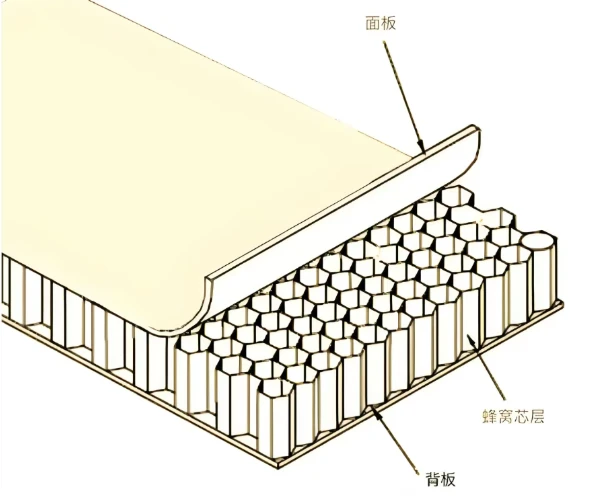
Honeycomb aluminum panels are a typical sandwich composite material. Their core structure, from the outside in, consists of an aluminum alloy face panel, an aluminum honeycomb core, and an aluminum alloy back panel, which are firmly bonded together using high-performance adhesives. This "skin-core" composite structure gives the material its key characteristics of being lightweight and high-strength.
| Comparison Item | Aluminum Honeycomb Panel | Solid Aluminum Panel | Stone (Granite) | Glass |
|---|---|---|---|---|
| Weight | Very light | Relatively light | Very heavy | Heavy (especially laminated glass) |
| Flatness / Deformation Resistance | Excellent (benefits from high strength-to-weight ratio) | Average (large panels prone to deformation) | Good (but brittle material) | Good (depends on supporting frame) |
| Sound & Thermal Insulation | Good (honeycomb core cavity effect) | Relatively poor | Average | Depends on structure (insulated glass performs well) |
| Weather Resistance / Service Life | Excellent (PVDF coating, ≥25 years) | Excellent (PVDF coating, ≥25 years) | Excellent (granite, ≥25 years) | Excellent (chemically stable material) |
| Economic Consideration | Higher initial cost, but low maintenance cost; better long-term cost efficiency | Moderate initial cost; high overall cost-performance ratio | Material and installation costs relatively high | Wide cost range; high-performance glass is expensive |
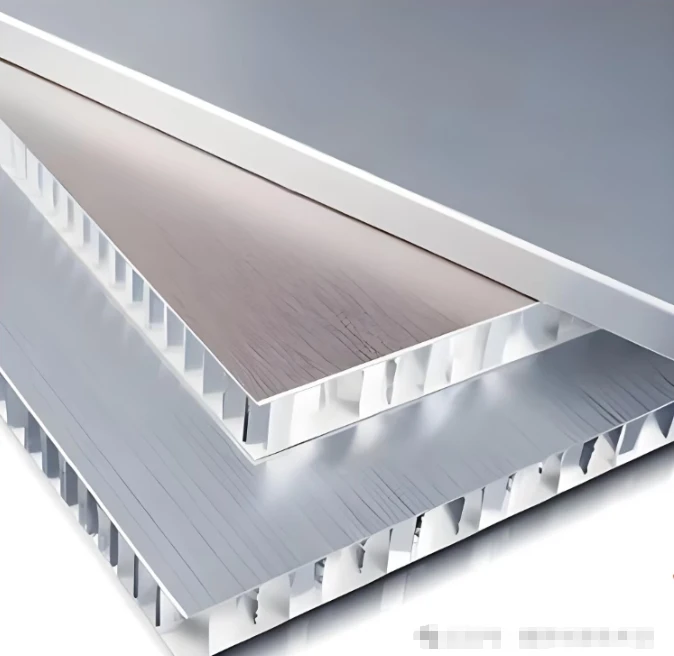
In building curtain wall systems, honeycomb aluminum panels are used for mid-to-high-end applications. Their initial material and manufacturing costs are higher than those of ordinary aluminum single panels, mainly due to the complex composite material processes and stringent quality control (such as high requirements for peel strength). However, thanks to their ultra-long weather resistance, low maintenance frequency, and potential energy-saving benefits during operation (due to their thermal insulation performance), their long-term economic advantages are often evident from a life-cycle cost (LCC) perspective, aligning with the concept of sustainable building.