

Comparison of top-hung, center-hung, and bottom-hung windows, detailed explanation of the hung window chart
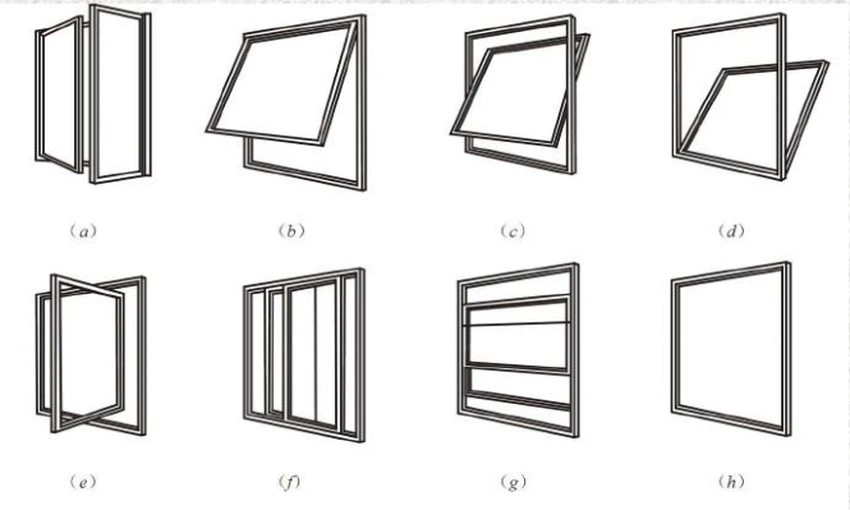
Hanged windows are windows that open along the horizontal axis, depending on the position of the hinges and the rotating shaft. Hung windows can be divided into three opening forms: top-hung windows, bottom-hung windows, and center-hung windows.
Due to unfamiliarity with national standards, many practitioners in the door and window industry call top-hung windows bottom-hung windows and bottom-hung windows top-hung windows. In fact, the definition of the national standard is very regular. For external windows, the position of the hinges (hinges) when people stand on the indoor side is the "up, down, left, and right" in the window name. So, let's take you to know them~
Top-hung windows
The hinges (hinges) are installed on the upper side of the window sash and open toward the outside. This type of window is generally rainproof.
Outward-opening top-hung windows are also a type of hung windows. Like other hung windows, they belong to the casement window series.
Outward-opening top-hung windows combine outward-opening top-hung windows and left-opening or right-opening external casement windows. Although the external casement top-hung window is derived from the external opening top-hung window and other window types, it is an independent window type like the external opening top-hung window and is not subordinate.
Common skylights generally use top-hung
Advantages of top-hung windows:
Good ventilation. Top-hung windows can also prevent strong winds from blowing directly on the human body and have certain wind resistance.
Good safety performance. Since the top-hung window is fixed by its hardware accessories when closed, it is not easy to open from the outside, and the anti-theft ability is very good. The use of top-hung windows can reduce head collisions.
Easy to clean and hygienic.
Strong practicality. It does not take up space. Even if you forget to close the window, it is difficult for rainwater to enter the room when it rains.
Good sealing performance. When the top-hung window is closed, it can be fixed by door and window accessories. Its own structural characteristics make it have better sealing performance.
Center-hung window
The so-called center-hung window refers to a window composed of a window frame and a window sash fixed with glass. Its characteristics are: the window sash is hinged to the middle of the window frame by a center hanger, and the floating center stile is divided into two parts, the upper part is fixed on the window frame, and the lower part is fixed on the window sash.
Advantages of the center-hung window:
Good ventilation performance. The center-hung window has the largest opening area, which is conducive to the indoor air circulation of the house and has strong circulation.
Strong practicality. It avoids occupying indoor space when the inner casement window is opened and can avoid conflicts with indoor items near the window.
Good sealing and thermal insulation performance. Through sealing and locking at multiple locking points around the window sash, the sealing effect and thermal insulation effect of doors and windows are guaranteed, and the sealing of windows can be greatly enhanced.
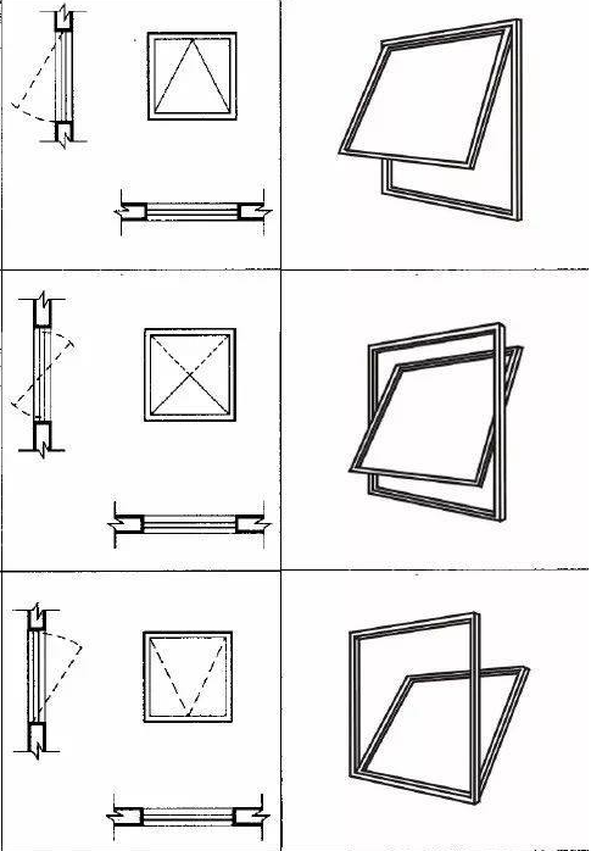
Bottom-hung window
The hinge is installed on the lower side of the window. The top-hung window opens to the outside, and the bottom-hung window opens to the inside. This opening method is also called inward tilt. At present, the most commonly used in households are inward opening and inward tilting. This type of window can not only hang down but also realize inward casement.
Advantages of bottom-hung windows:
When tilting inward, it does not occupy indoor space, the curtains can be opened and closed freely, and the lifting hanger will not conflict with the window sash;
When tilting inward, you can only open the window to the inward opening state after closing it indoors, and the opening angle is small. Even if you go out, you can switch to the inward tilt mode, while maintaining fresh indoor air, without worrying about strangers entering the house;
When using the inward tilt state for ventilation in winter, the wind enters the room from both sides and the top, and will not blow directly on people, making you feel more comfortable;
Opening windows for ventilation on rainy days can also effectively prevent rain from entering the room;
Opening the window sash inward can facilitate the owner to clean the outdoor glass.