

Production Process and installation method
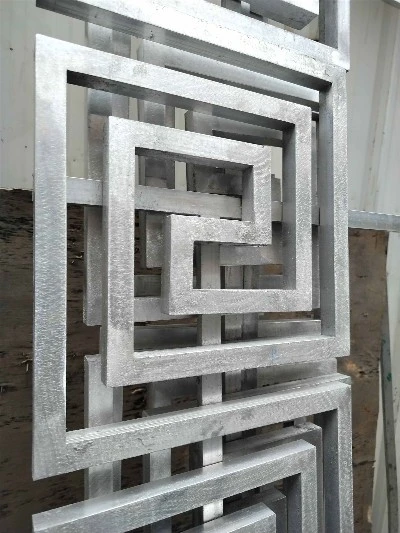
1. After welding and polishing, the semi-finished aluminum veneer is beautified through spraying, painting, and baking. This process gives the exquisitely crafted panel a strong visual impact.
2. Durable and easy to install. Made of metal, the aluminum veneer boasts exceptional hardness, toughness, and impact resistance. Multiple layers of paint coat the surface, providing not only aesthetic appeal but also resistance to acid, alkali, and corrosion. This ensures a long service life, whether used indoors or outdoors.
3. Although made of metal, this panel is lightweight and finely crafted. The slots on the outer edges are manufactured with high precision. This makes the aluminum veneer easy to transport over long distances and straightforward to install on site. It is also recyclable and environmentally friendly.
4. The reinforcing ribs are connected to the panel surface using electric welding or screws, forming a solid unit. This greatly enhances the strength and rigidity of the curtain wall system, ensuring its flatness and resistance to wind and seismic forces during long-term use. If required, high-efficiency sound or thermal insulation materials can be installed inside the aluminum panel.
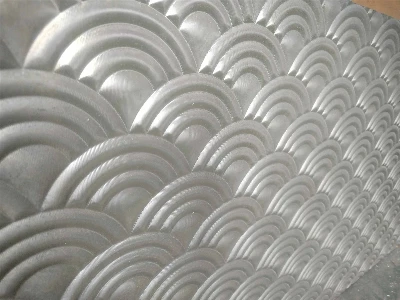
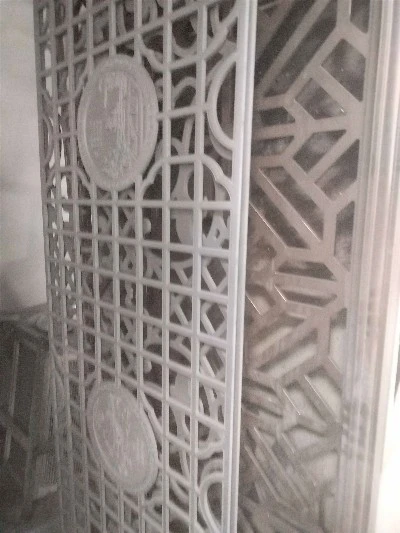
5. Exterior aluminum veneer panels typically undergo pre-treatments such as chromating before the application of a fluorocarbon spray coating. The coating system, often based on resins like KYNAR500, is typically applied in two, three, or four layers. It provides excellent corrosion and weather resistance, protecting against acid rain, salt spray, and pollutants. It also offers strong resistance to heat, cold, and UV radiation, maintaining color fastness for a long service life. Our factory uses high-quality coatings from manufacturers such as PPG, DNT, AKZO, and NIPPON.
6. Arc aluminum veneer panels are primarily made from high-grade aluminum alloy. They undergo various processes including cutting, folding, bending, welding, reinforcing, polishing, and painting. As a leading choice for exterior wall decoration, they offer advantages over materials like tiles, glass, and stone. They are lightweight, strong, rigid, and easy to process. The fluorocarbon coating provides exceptional weather and UV resistance, long-lasting color, and excellent corrosion resistance, allowing performance in temperatures from -50°C to 80°C.
Fluorocarbon-coated aluminum curtain wall panels are made from high-grade aluminum alloy, processed through forming and other techniques, and finished with paints from leading suppliers. These systems provide a smooth, flat surface with excellent wind resistance. Available in various colors and finishes, they impart a modern aesthetic. The rational design meets diverse functional needs and is widely used in commercial and industrial buildings.
While these panels are common, their production and installation methods may not be widely understood. Below is a detailed introduction.
A. Deepening Design of Project Plan
B. Professional Product Drawing Production
C. Sheet Metal Production
Computer Cutting -> Punching and Shearing the Four Corners -> Mechanical Drawing -> Planing and Bending Grooves -> Punching Process -> Plate Bending
D. Product Blank Post-Production Process
Close Welding -> Plate Back Nailing -> Welding Position Grinding -> Reinforcement Rib Installation -> Fine Polishing
E. Surface Pretreatment
Pre-spraying Treatment (Pickling and Degreasing) -> Chromate Conversion Coating (Anti-oxidation) -> Professional Fluorocarbon or Powder Spraying -> High-Temperature Baking and Curing
F. Product Protection and Packaging Sequence
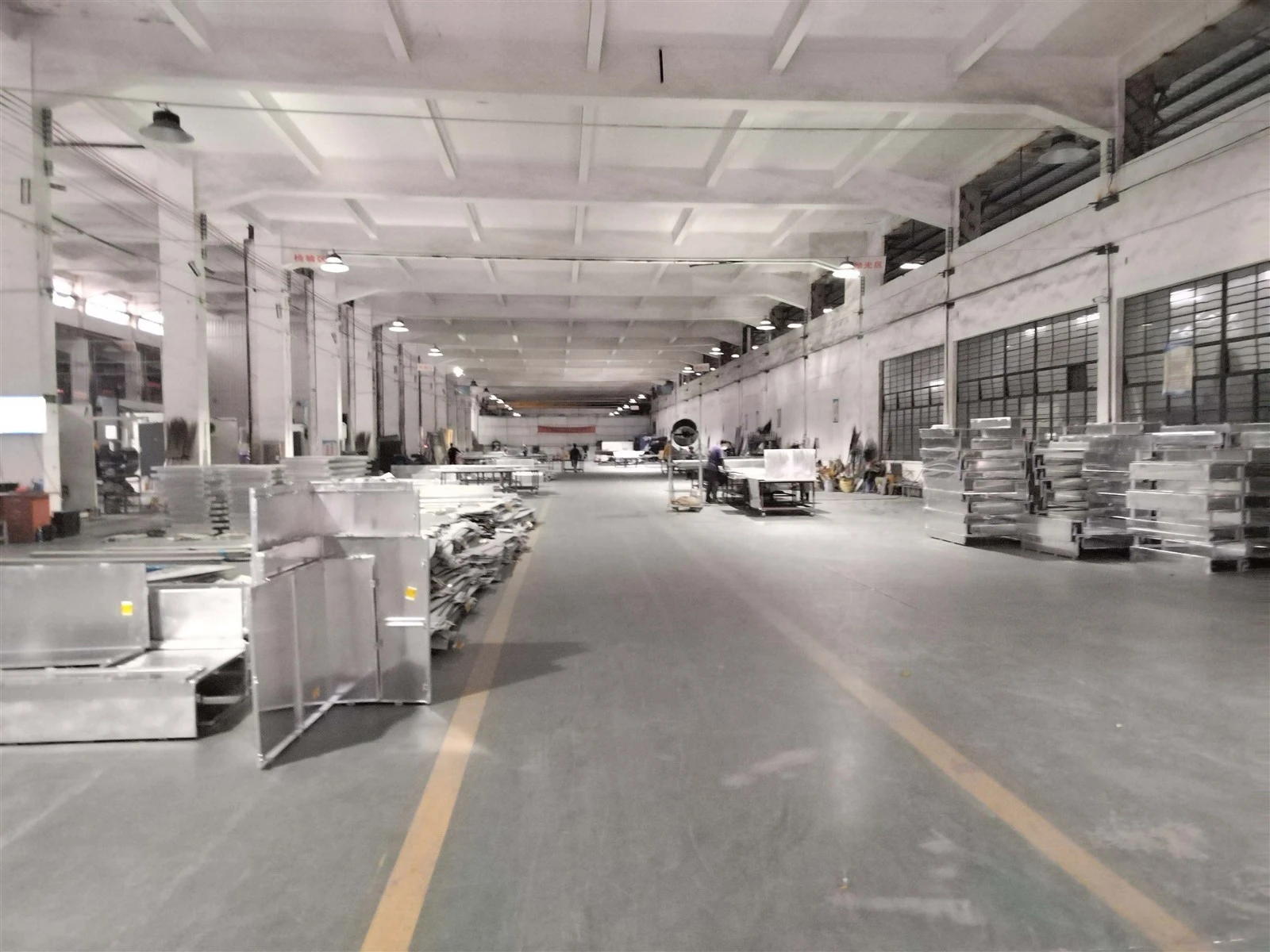
Product Surface Protection Film -> Product Labeling -> Carton Packaging with Corner Protection -> Wooden Box Packaging
Note: Special sizes require mold making or manual bending and can be customized according to drawing requirements.
Fluorocarbon Sprayed Aluminum Veneer Curtain Wall Installation Method
1. Tools
Toothless saw blade cutting machine, hand drill, impact drill, nail gun, various drill bits, wrenches, screwdrivers, hammer, ink lines, plumb lines, nylon lines, steel measuring tapes, electric welder, oxygen cutting equipment, passive suction cups, electric hanging baskets, glue injection guns, pneumatic rivet guns, safety belts, etc.
2. Preparation Work Before Materials Arrive at the Site
This initial stage work should be completed on time with guaranteed quality and quantity.
(a.) After signing the contract, the designer must promptly develop a material plan based on the architectural and curtain wall engineering drawings.
(b.) Project management and production departments collaborate to create a processing plan based on the construction schedule and site conditions, ensuring timely production and delivery.
Using fluorocarbon aluminum veneer for exterior walls can improve energy efficiency and indoor thermal stability. It helps manage humidity, preventing condensation and protecting insulation materials, thereby enhancing the wall's overall thermal performance and impact resistance. For enhanced sound or thermal insulation, materials like rock wool or foam can be added inside the panels. Surface treatments can be anodized or sprayed; anodized panels offer stain resistance, easy cleaning, weather resistance, a metallic look, and fire resistance.
Installation costs: Typical manufacturers charge between 25 and 30 yuan per square meter. Prices for aluminum gusset ceilings vary by region. Additional fees apply for plumbing or special designs. Installations like ceiling lights and bathroom heaters require manufacturer assistance, while aluminum ceiling installers are responsible for drilling holes. Aluminum gussets are a type of metal ceiling product with excellent corrosion resistance, including resistance to oil smoke and moisture, complementing the superior features of gypsum board.
Advantages of Fluorocarbon Sprayed Aluminum Veneer
Fluorocarbon sprayed aluminum veneer is generally divided into two categories: indoor and outdoor. Fluorocarbon paint is typically used for outdoor use. However, since fluorocarbon paint is a paint with an odor, its use indoors could be harmful to people's health. Therefore, fluorocarbon aluminum veneer is generally used outdoors. Fluorocarbon aluminum veneer has more advantages than prominent disadvantages. So, what are the outstanding features of fluorocarbon aluminum veneer? Fluorocarbon sprayed aluminum veneer offers excellent weather and UV resistance, and its color remains stable over time. Fluorocarbon sprayed aluminum veneer for exterior walls, when paired with appropriate alkali-resistant primers and topcoats, exhibits excellent mechanical properties, good adhesion, impact resistance, high hardness (scratch resistance), and high cleanability. Fluorocarbon sprayed aluminum veneer walls can be produced in a variety of finishes, including solid colors, matte finishes, metallic effects, and curtain wall simulations, offering excellent decorative properties. Fluorocarbon coatings for exterior walls perform well in environments such as seas, deserts, and chemically corrosive (acidic and alkaline) environments. Fluorocarbon aluminum veneer panels offer excellent weather resistance. Depending on the coating, building, and environment, the permissible color loss within the visible light range for 10-30 years of fluorocarbon coatings is within acceptable limits. This means that even a 10-30-year-old fluorocarbon exterior wall will show no noticeable difference compared to a newly sprayed one after just one month. Fluorocarbon aluminum veneer curtain walls and glass curtain walls are low-cost, have no photochemical pollution, and comply with national environmental regulations.
- Perforated aluminum veneer has a certain residual value, but due to its high cost, it still results in much greater waste than aluminum-plastic composite panels, which have virtually no residual value. Based on the above analysis, perforated aluminum veneer and aluminum-plastic composite panels each have their advantages, but from a broader perspective, aluminum-plastic panels are more cost-effective and environmentally friendly. Perforated aluminum veneer offers excellent sound insulation and shock absorption properties. It can be freely perforated and insulated with sound-absorbing cotton, rock wool, and other sound-absorbing and heat-insulating materials. It is flame-retardant and produces no toxic smoke in the event of a fire.
- Curved aluminum veneer can be recycled and reused, which is more environmentally friendly. Curved aluminum veneer is different from aluminum-plastic panels and other decorative panels. After assembly, it can be completely recycled and reused. It will not pollute our living environment. This has, to a certain extent, reduced the pressure brought to us by environmental protection.
- Corrosion resistance of curved aluminum veneer: The surface fluorocarbon spraying KYNAR500 resin has a high content, which can effectively resist the erosion of acid rain, air pollution and ultraviolet rays.
- The curved aluminum veneer has rich colors: there are as many as 100 colors of fluorocarbon coating, and special colors can be created according to user requirements.
- Curved aluminum veneer is self-cleaning: The unique molecular structure of KYNAR500 in the fluorocarbon coating prevents dust from adhering to its surface, resulting in extremely strong cleanliness. Curved aluminum veneer is recyclable and environmentally friendly. Aluminum veneer can be processed into various shapes, including flat panels, hyperbolic panels, and special-shaped panels.